Florida Certified Roofing Contractor CCC 1334537
Roof tarping that holds until the real repair
Blue tarps and shrink-wrap roof covers anywhere in Florida, put on by a certified roofing contractor who then quotes the permanent repair at a written flat rate.
What we do
A tarp is only as good as where it is fastened. Screwed down through the middle of the roof, or stopped short of the ridge, it lets water run in under it and adds new holes to the deck. A roofer knows which way water moves across a tile, shingle, metal or flat roof, so the cover goes on to shed water past the damage, not into it. Then, because roofing is all we do, the same company quotes the permanent repair.
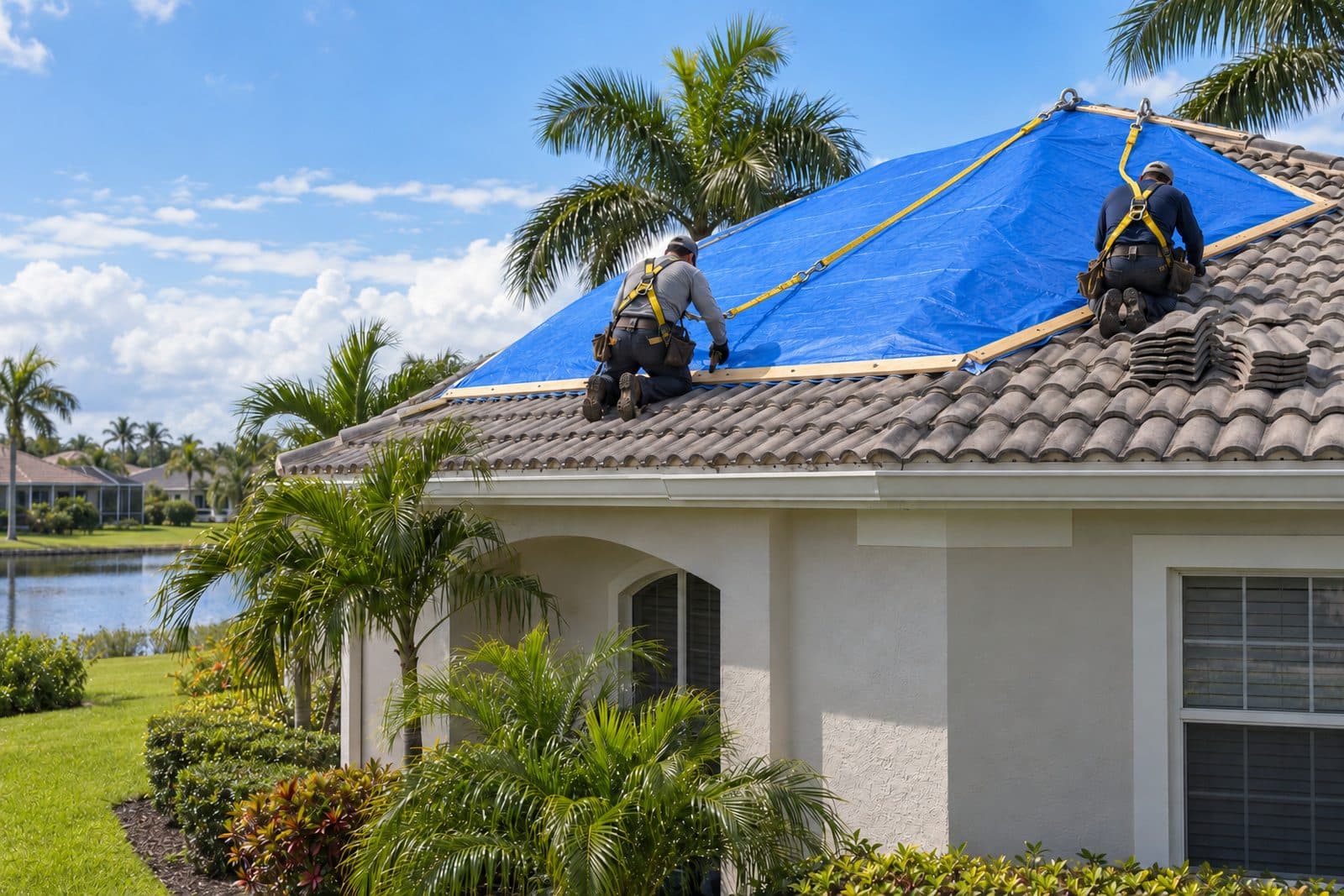
- Blue tarp dry-in: a polyethylene tarp secured with wood battens fastened along its edges, run over the ridge where the roof allows so water sheds over it, not under it.
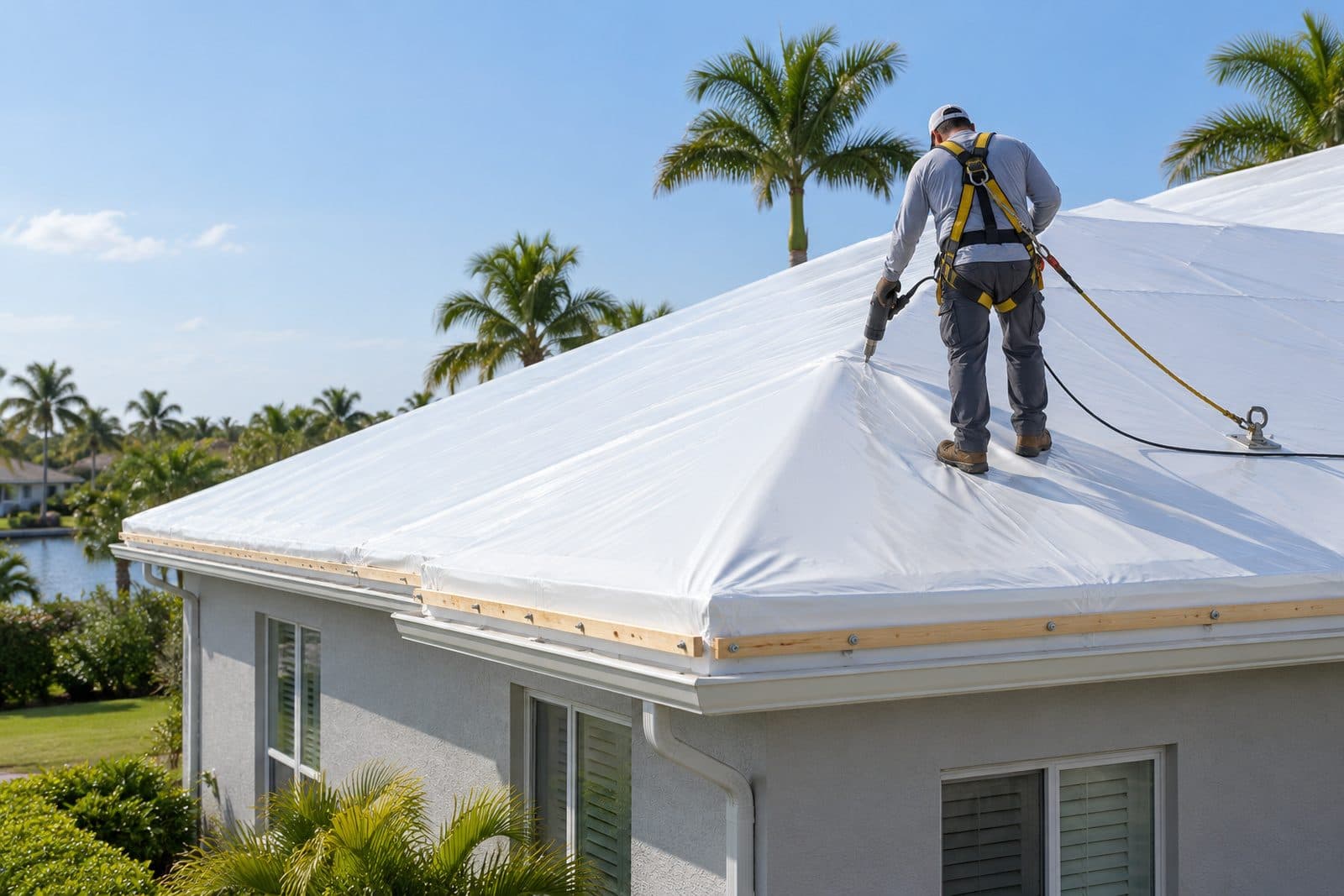
- Shrink-wrap roof covers: polyethylene film heat-shrunk tight over the damaged section or the whole roof, with fewer loose edges for the wind to catch. It is designed to last up to about a year (a typical lifespan, not a promise), longer than a standard blue tarp.
- A look at the damage before anything goes on: where the roof is open, where water is getting in, and whether the deck is sound enough to fasten to.
- Covers fastened to suit the roof underneath: tile, shingle, metal and flat roofs each need a different approach.
- Photos of the damage before the cover goes on and after it is in place, for your records and your insurance claim.
- A written flat-rate quote for the permanent repair or re-roof, so the tarp can come off as soon as the real work is scheduled.
What affects the cost of a roof tarp
Roof size and pitch
The size of the damaged area sets how much material goes on, and a steep roof takes more time and safety setup to cover than a low one.
Access
A second story, overhanging trees, pool enclosures or debris still on the roof all change how the crew gets up there and how long it takes.
Blue tarp or shrink wrap
A blue tarp with battens is the quicker cover. Shrink wrap uses heavier film and a heat-shrink step, and it is designed to last up to about a year (a typical lifespan, not a promise), longer than a standard blue tarp.
How long the cover needs to stay up
If the permanent repair is close, a tarp may be all you need. If the wait is longer, for materials, a permit or an insurance decision, a tougher cover can be the better choice.
Storm demand
After a storm that hits a wide area, roofers and materials are in demand everywhere at once, and that can affect scheduling and the quote.
A tarp is temporary. The repair is roofing work.
A tarp or shrink-wrap cover keeps water out while the permanent repair is planned. It is not the repair, and the longer it stays up, the more sun, heat and wind wear it down.
Roofing work in Florida legally requires a licensed roofing contractor and generally a permit from the local building department; a contractor's license is verified on the Florida DBPR website.
Flat Rate Roofing holds Florida Certified Roofing Contractor license CCC 1334537, a state certification valid in every Florida county. The company that covers your roof can quote, permit and finish the permanent repair.
You can verify our license at Florida DBPR.
Roof tarping questions, answered
- What is the difference between a blue tarp and shrink wrap?
- A blue tarp is a polyethylene sheet held down with wood battens along its edges. It goes on quickly and suits a smaller damaged area or a short wait. Shrink wrap is heavier polyethylene film that is heated until it pulls tight against the roof, so there are fewer loose edges for the wind to lift. It is designed to last up to about a year (a typical lifespan, not a promise), longer than a standard blue tarp and suits larger damage or a longer wait. We tell you which fits your roof and why.
- How long can a tarp stay on my roof?
- Treat any cover as temporary. Florida sun, heat and wind wear a tarp down, and a cover that has been up through more storms should be checked. Shrink wrap is designed to last up to about a year (a typical lifespan, not a promise), longer than a standard blue tarp, but neither one replaces the repair, so the sooner the permanent work is scheduled, the better.
- Will my insurance pay for the tarp?
- Only your insurer can answer that, so talk to your agent or carrier. Many homeowners policies ask you to take reasonable steps to prevent more damage after a loss, so check what yours says. What we can do is photograph the damage before the cover goes on and after it is in place, and give you a written scope of the permanent repair to share with them.
- Should I put a tarp on the roof myself?
- Climbing onto a wet, storm-damaged roof is risky, and a tarp fastened in the wrong place can channel water in under it. If you cannot do it safely, stay off the roof. From inside, move belongings away from the leak, catch the water and photograph what you see, then call us.
- Do you tarp roofs outside South Florida?
- Yes. Our roofing certification is a state certification valid in every Florida county, and we take tarping and repair work anywhere in Florida. Our office is in Sunrise. Call (954) 775-8990; the phone is answered 24/7, and we will tell you honestly when we can get there.
Free tools for homeowners
Questions about roof tarping
All homeowner questionsRequest roof tarping or a repair quote
Tell us what happened (a storm, a fallen limb, missing tile or shingles) and roughly where the roof is open.